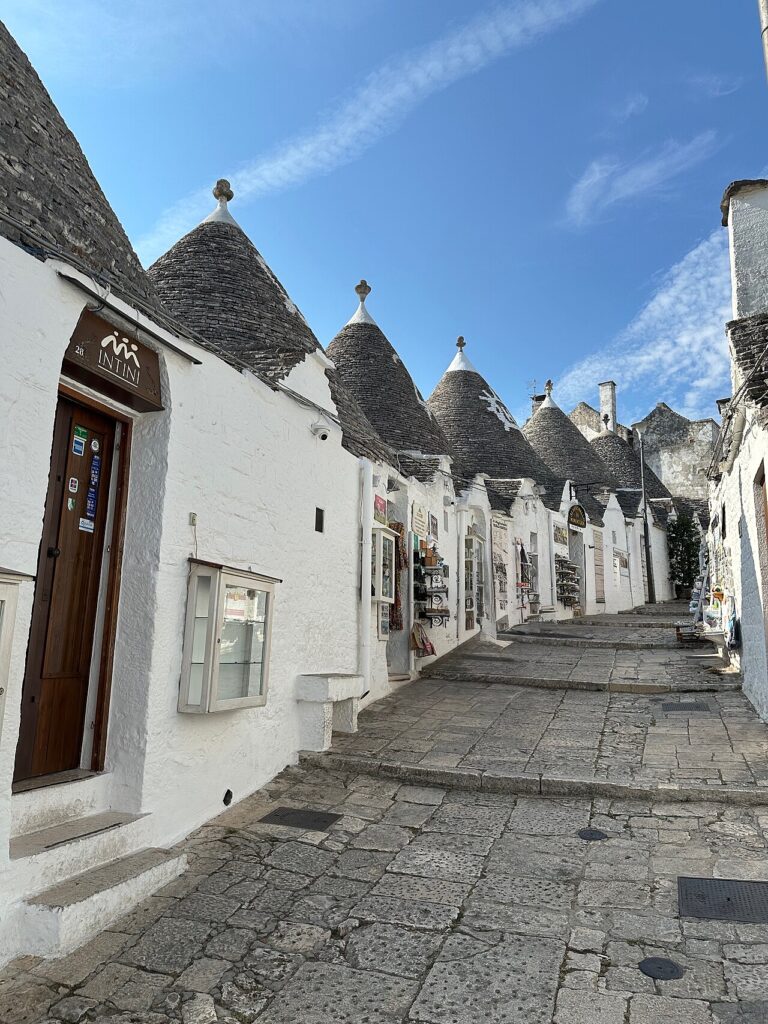
Alberobello sits in the Valle d’Itria in Puglia, about 55 kilometers southeast of Bari. The town is famous for its trulli — whitewashed stone huts with conical roofs made from stacked limestone slabs. Over 1,500 trulli cluster in two main districts, and the whole zone has UNESCO World Heritage status.
These structures date back to the 14th century, though most of what you see today was built in the 1600s and 1700s. Farmers and laborers constructed them using a dry-stone technique, without mortar. The pointed roofs often have painted symbols — religious, astrological, or protective marks that vary from house to house.
Getting There and Getting Around
The nearest airport is Bari Karol Wojtyła, about an hour away by car. Trains run from Bari Centrale to Alberobello on the private Ferrovie del Sud Est line. The journey takes 90 minutes and costs around $6. You can also reach Alberobello from Brindisi in about 90 minutes by train.
The town itself is small. You can walk between the two main trulli districts — Rione Monti and Rione Aia Piccola — in under ten minutes. Rione Monti is the larger and more commercial zone, with souvenir shops, restaurants, and trulli converted into boutiques. Rione Aia Piccola is quieter and more residential, with about 400 trulli where families still live.
Park outside the historic center if you’re driving. The streets are narrow and not built for modern cars. A free parking lot sits near the Trullo Sovrano on Via Monte San Michele.
What to See
Start at the Trullo Sovrano on Piazza Sacramento. This is the only two-story trullo in town, built in the 18th century for a wealthy priest’s family. It’s now a museum furnished in period style. Entry costs about $2. Open daily except Mondays.
Walk through Rione Monti along Via Monte Nero and the side streets branching off it. Many trulli here function as shops selling local products — olive oil, wine, pasta, ceramics. The Church of Sant’Antonio, at the top of Rione Monti, is itself built in trullo style, with a dome instead of the usual peaked roof.
Cross over to Rione Aia Piccola for a quieter experience. Fewer tourists, fewer shops. People hang laundry between trulli and tend small vegetable gardens. You’ll get a better sense of how these structures work as actual homes.
The Museo del Territorio on Via Monte San Michele covers the history and construction methods of trulli, with tools and photographs. Entry is around $3.
Where to Stay and Eat
You can sleep in a trullo. Several have been converted into guesthouses and small hotels. Trulli Holiday offers individual trulli for rent in Rione Aia Piccola, with kitchens and private courtyards. Expect to pay $120 to $200 per night depending on size and season.
For food, focus on Pugliese specialties. Orecchiette with cime di rapa (turnip greens) is the signature pasta of this region. Ristorante Il Pinnacolo on Via Monte San Michele serves traditional dishes in a converted trullo. Dinner runs about $35 per person with wine.
La Cantina on Vico Lippolis has a good selection of Puglian wines, including primitivo and negroamaro from nearby Manduria and Salice Salentino. They also serve panzerotti — fried half-moon pastries filled with mozzarella and tomato, another regional staple.
Buy fresh burrata from Caseificio Palazzo on Via Indipendenza, just outside the historic center. Made that morning. Costs about $5 for a 250-gram portion.
Practical Tips
Summer gets hot and crowded. Visit in May, June, September, or October for better weather and fewer tour groups. Early morning and late afternoon offer the best light for photographs and the fewest people.
Shops and restaurants in the trulli districts often close between 1pm and 4pm. Plan your lunch accordingly or pack something to eat.
Alberobello works well as a day trip, but staying overnight lets you explore after the day-trippers leave. The town empties by 6pm, especially in Rione Monti.
Combine Alberobello with other Valle d’Itria towns. Locorotondo is 10 kilometers away, with a circular old town and white buildings similar to Alberobello but without the trulli. Martina Franca, 15 kilometers south, has baroque architecture and an excellent weekly market on Wednesdays.
If you want to see trulli construction techniques up close, visit the Trullo Sovrano museum or ask at your accommodation. Some trullo owners are happy to explain the roof structure and show you the interior corbelling.
The trulli of Alberobello are specific to this corner of Puglia. You won’t find them anywhere else in Italy with this concentration and preservation. That makes the trip worth it if you’re already in the south or want to explore beyond the usual northern cities.
Want more detailed guides to Italy’s lesser-known regions and practical travel advice? Subscribe to The Ultimate Italy Travel Guide newsletter — one free letter in your inbox every Friday.
Tours & experiences in Italy


Powered by Viator. Some links are affiliate links — we may earn a small commission at no extra cost to you.