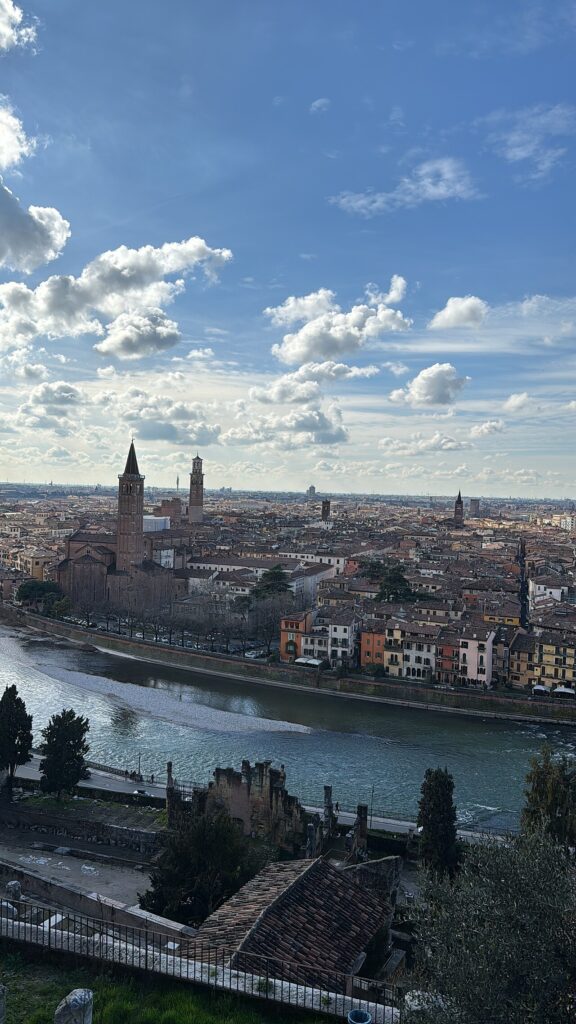
Verona sits between Milan and Venice on the main rail line, making it an easy stop or a base for exploring the Veneto region. Two days gives you enough time to see the Roman arena, walk the medieval streets, and understand why this city matters beyond the Shakespeare connection.
Trains from Milan take about 90 minutes. From Venice, it’s 70 minutes. The station is a 20-minute walk from the historic center, or take bus 11, 12, or 13 to Piazza Bra.
Day One: Roman Verona and the Historic Center
Start at the Arena di Verona in Piazza Bra. This Roman amphitheater from the first century is the third-largest in Italy and still hosts opera performances in summer. Entry costs about $12. It’s open Tuesday through Sunday, 8:30am to 7:30pm. Monday hours are shorter, 1:30pm to 7:30pm.
From Piazza Bra, walk Via Mazzini—the main shopping street—to Piazza delle Erbe. This was the Roman forum. Now it’s a market square with produce stalls, tourists, and cafés under frescoed buildings. The Torre dei Lamberti stands at one corner. Climb it for views over the city—364 steps, or take the elevator. About $10.
Casa di Giulietta is two blocks away on Via Cappello. The courtyard is free, though crowded. The balcony and museum cost about $8. Most visitors skip the interior.
For lunch, try Osteria Sottoriva near the river on Via Sottoriva. Order risotto all’Amarone, a Veronese dish made with the region’s most famous red wine. Expect to pay $18 to $25 for a main course.
After lunch, cross Ponte Pietra, the Roman bridge rebuilt after World War II. Climb to the Teatro Romano and archaeological museum above it. The ruins are impressive, and the view from the terraces looks back across the river to the historic center. Entry about $6, free on the first Sunday of each month.
Day Two: Churches, Castles, and Wine
Start at the Duomo in the northern part of the center. The Romanesque cathedral has Titian’s Assumption in the first chapel on the left. The baptistery and archaeological excavations are part of a combined ticket with other churches—about $8 total.
Walk to Basilica di San Zeno Maggiore, west of the center, about 15 minutes from Piazza Bra. This is one of northern Italy’s finest Romanesque churches. Bronze doors from the 11th and 12th centuries show biblical scenes. Mantegna’s altarpiece is inside. Entry about $4. Closed during the midday break from 12:30pm to 3pm.
Castelvecchio sits on the river between San Zeno and the center. The medieval fortress now houses the city art museum, with works by Bellini, Veronese, and Tintoretto. The castle itself and the bridge behind it are worth the visit even if you skip the galleries. Museum entry about $8. Closed Mondays.
For lunch or an early dinner, go to Enoteca Cangrande on Via Dietro Listone near Piazza Bra. They serve Veronese wines by the glass with small plates—polenta with Monte Veronese cheese, pastissada de caval (horse stew, traditional in the Veneto), or bigoli pasta with duck ragù. A meal with wine runs $25 to $40.
Where to Eat Dinner
Trattoria al Pompiere on Vicolo Regina d’Ungheria serves Veronese standards in a brick-vaulted dining room. Try the pearà, a sauce made from bread crumbs, bone marrow, and black pepper served with boiled meats. Reservations help, especially on weekends. About $30 to $45 per person with wine.
For something lighter, Antica Bottega del Vino on Via Scudo di Francia has been pouring wine since 1890. The list includes hundreds of labels from the Veneto and beyond. Pair a glass of Valpolicella Superiore with local salumi and cheese. About $20 to $30.
Practical Notes
The Verona Card covers entry to most monuments and churches, plus city buses. A 24-hour card costs about $25, 48 hours about $30. It pays for itself if you visit three or four sites.
Many restaurants close on Mondays. The same midday closure applies—most shops and some churches close from 1pm to 3:30pm or 4pm.
If you’re driving, park outside the ZTL limited-traffic zone. The historic center is mostly closed to cars, and cameras issue automatic fines—often $100 or more. Use the parking areas near the train station or at Cittadella.
Verona works well as a day trip, but staying two nights lets you see the city in the evening when the day-trippers leave and the opera-goers fill Piazza Bra.
For more practical guides and weekly Italy travel tips, subscribe to The Ultimate Italy Travel Guide newsletter. One free letter every Friday.
Tours & experiences in Italy


Powered by Viator. Some links are affiliate links — we may earn a small commission at no extra cost to you.