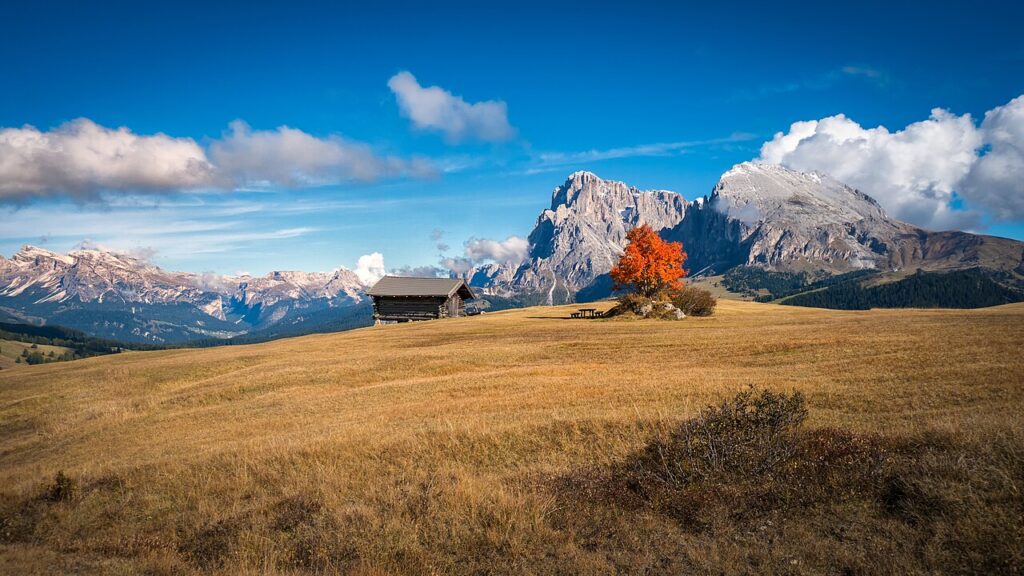
The Great Dolomites Road (Strada delle Dolomiti) runs 110 kilometers from Bolzano in South Tyrol (Alto Adige) to Cortina d’Ampezzo in Veneto. The route crosses three high mountain passes and connects valleys carved between pale limestone peaks that turn pink at sunrise and sunset.
Most drivers complete the journey in three to four hours without stops. Plan a full day if you want to hike, photograph, or eat along the way.
The Route and Key Stops
From Bolzano, take the SS241 east through the Val d’Ega valley. The first major stop is Carezza Lake (Lago di Carezza), about 25 kilometers from Bolzano. The small alpine lake sits at 1,534 meters with views of the Latemar massif. A walking path circles the lake in 20 minutes. Arrive before 10am or after 4pm to avoid tour buses. Parking costs around $8.
Continue east to Passo Costalunga (1,753 meters), the first of three mountain passes. The road then descends into the Val di Fassa in Trentino, where you’ll pass through the towns of Vigo di Fassa and Canazei. Both have restaurants and lodging if you’re breaking the journey into two days.
The road climbs again to Passo Pordoi (2,239 meters), the highest point on the route. A cable car runs from the pass to Sass Pordoi at 2,950 meters. The ride costs about $22 round trip and operates from June through September, weather permitting. At the top, marked trails lead across high alpine terrain with views into Austria.
After Passo Pordoi, the route reaches Arabba, then climbs to Passo Falzarego (2,105 meters). A chairlift connects to the Lagazuoi mountain, where tunnels and trenches from World War I remain accessible to visitors. From Falzarego, the road descends 18 kilometers to Cortina d’Ampezzo.
When to Drive It
The Great Dolomites Road is open year-round, but the high passes can close temporarily after heavy snow. Check road conditions at viaggiatrento.it or provincia.bz.it/servizi-strade before you leave.
June through September offers the most reliable weather and all facilities open. July and August bring the most traffic. September has fewer crowds and clear skies, though some mountain refuges begin closing after mid-September.
October brings fall colors to the larch forests. By November, snow can make the passes difficult without winter tires.
Winter drivers should carry chains. The passes stay open for skiing access to Alta Badia and Arabba, but expect slower travel and check avalanche forecasts.
Practical Details for Drivers
Rent a car in Bolzano or pick one up at Innsbruck Airport (75 kilometers north) if you’re flying in. Cortina d’Ampezzo has rental agencies if you plan to drive one way and return the car there.
The road is paved and well-maintained but narrow in sections with steep drop-offs and tight switchbacks. Guardrails are not continuous. Motorcyclists favor this route, especially in summer.
Gas stations are available in the valley towns but not at the passes. Fill up in Bolzano, Canazei, or Arabba.
Cell coverage is generally good in the valleys but can drop out at higher elevations.
If you don’t want to drive, SAD buses run from Bolzano to Cortina with stops along the route. The journey takes about four hours with connections. Check sad.it for schedules.
Where to Eat and Stay
Rifugio Fuciade, accessible by a short hike from Passo San Pellegrino (a side route south from Canazei), serves polenta with venison ragù and other Trentino mountain dishes. Open June through September. Expect to pay around $18 for a main course.
In Canazei, Osteria La Montanara makes canederli (bread dumplings) in broth or with butter and speck. A bowl costs about $14.
For lodging along the route, Canazei and Arabba have hotels in all price ranges. In Cortina, book ahead from December through March and in July and August. A mid-range double room runs $120 to $200 depending on season.
If you’re planning a driving trip through the Dolomites, Viator offers guided tours that cover this route if you’d rather not drive yourself.
Want more routes, regional food guides, and practical tips for travelling in Italy? Subscribe to The Ultimate Italy Travel Guide newsletter. One free letter in your inbox every Friday.
Heads up — some links in this article are affiliate links. If you sign up through them, we may earn a small commission at no extra cost to you. We only recommend tools we use ourselves.
Tours & experiences in Italy


Powered by Viator. Some links are affiliate links — we may earn a small commission at no extra cost to you.