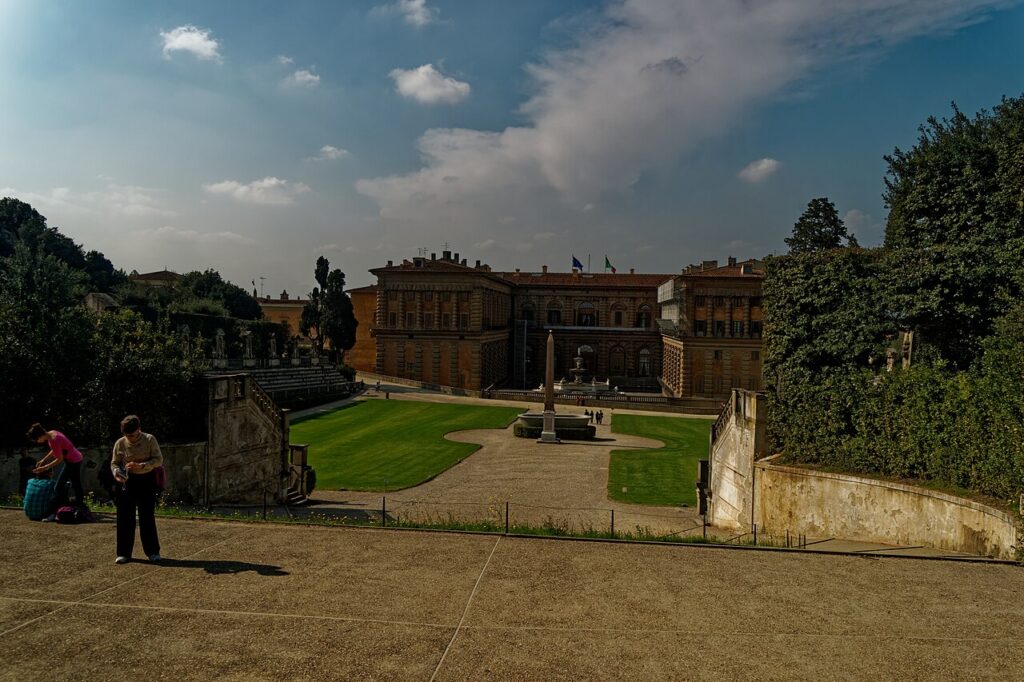
The Palazzo Pitti sits on the south side of the Arno in Florence (Firenze), a ten-minute walk from the Ponte Vecchio. The palace was built in the 1450s for the banker Luca Pitti, then bought by the Medici family in 1549. It served as the main residence for Tuscan rulers until 1919.
Today the palace complex holds five separate museums and the Boboli Gardens behind it. You can easily spend half a day here, longer if you want to see everything.
The Museums Inside
The Palatine Gallery takes up the piano nobile, the grand first floor of the palace. The rooms still look like a private residence, with paintings hung salon-style from floor to ceiling. You’ll find works by Raphael, Titian, Rubens, and Caravaggio. The Gallery of Modern Art on the upper floors covers Italian art from the late 1700s through the early 1900s, mostly Tuscan painters you won’t see elsewhere.
The Royal Apartments show how the palace looked when the Italian royal family lived here in the 1800s. The Treasury of the Grand Dukes (also called the Silver Museum) displays the Medici collections of carved gemstones, jewelry, and decorative objects. The Costume and Fashion Museum rotates exhibits from its collection of historical clothing.
A combined ticket for all five museums plus the Boboli Gardens costs about $20. The Palatine Gallery and Royal Apartments are the main draw. If you’re short on time, skip the others and spend more time in the gardens.
The Boboli Gardens
The gardens spread across the hill behind the palace. They cover about 110 acres and took shape over several centuries, starting in the 1540s when the Medici first bought the property.
From the palace, paths lead upward past fountains, grottoes, and Renaissance sculptures. The amphitheater near the entrance was used for early opera performances. The Neptune Fountain sits at the top of the hill with views over Florence’s rooftops and the Duomo.
The Kaffeehaus, an 18th-century pavilion at the garden’s high point, has a café where you can rest. Further along, the Porcelain Museum occupies a small casino with more Medici collections.
The gardens connect to two other green spaces. The Bardini Gardens sit just outside the eastern wall, with terraced walks and wisteria tunnels. A combined ticket that includes both costs about $15. The Forte Belvedere, a 16th-century fortress at the gardens’ highest point, opens periodically for art exhibitions and always for the view.
Practical Details
The Palazzo Pitti opens Tuesday through Sunday, 8:15am to 6:30pm. It closes on Mondays, like most state museums in Italy. The Boboli Gardens keep the same hours but close earlier in winter, around 4:30pm in December and January.
Buy tickets online to skip the entrance line. The palace is less crowded than the Uffizi, but summer mornings still draw tour groups. Late afternoons work well, especially in the gardens when the light is softer.
Getting there is straightforward. From Santa Maria Novella station, take bus D to Pitti or walk about 25 minutes through the centro storico. From the Duomo, it’s a 15-minute walk south across the Ponte Vecchio.
Wear comfortable shoes. The cobblestone courtyard and gravel garden paths are uneven, and you’ll be walking uphill. Bring water in summer. The gardens have little shade, and Florence gets hot from June through August.
The palace has no café beyond a small bar near the ticket office. The neighborhood around Piazza Pitti has restaurants and coffee bars. For a quick lunch, try the Osteria dell’Enoteca on Via Romana for Tuscan standards like ribollita and bistecca.
What to See Nearby
The church of Santo Spirito is five minutes west of the palace, across Piazza Pitti. Brunelleschi designed it in the 1440s. The interior is one of the purest examples of Renaissance architecture in Florence, with clean columns and proportions that feel almost mathematical.
The Brancacci Chapel in the church of Santa Maria del Carmine, ten minutes further west, holds frescoes by Masaccio from the 1420s. They influenced every painter who came after, including Michelangelo. The chapel requires a separate ticket (about $12) and timed entry.
Viator offers skip-the-line tickets and guided tours of the Palazzo Pitti if you want context for what you’re seeing. A guide helps in the Palatine Gallery, where there are no labels explaining why the paintings hang where they do.
The neighborhood south of the Arno, called the Oltrarno, has artisan workshops, wine bars, and fewer tourists than the north side. It’s worth an evening walk after the palace closes.
Want more detailed guides to Florence and the rest of Italy? Subscribe to The Ultimate Italy Travel Guide newsletter. We send one free letter every Friday with practical advice for planning your trip.
Heads up — some links in this article are affiliate links. If you sign up through them, we may earn a small commission at no extra cost to you. We only recommend tools we use ourselves.
Tours & experiences in Italy


Powered by Viator. Some links are affiliate links — we may earn a small commission at no extra cost to you.